Web cookies (also called HTTP cookies, browser cookies, or simply cookies) are small pieces of data that websites store on your device (computer, phone, etc.) through your web browser. They are used to remember information about you and your interactions with the site.
Purpose of Cookies:
Session Management:
Keeping you logged in
Remembering items in a shopping cart
Saving language or theme preferences
Personalization:
Tailoring content or ads based on your previous activity
Tracking & Analytics:
Monitoring browsing behavior for analytics or marketing purposes
Types of Cookies:
Session Cookies:
Temporary; deleted when you close your browser
Used for things like keeping you logged in during a single session
Persistent Cookies:
Stored on your device until they expire or are manually deleted
Used for remembering login credentials, settings, etc.
First-Party Cookies:
Set by the website you're visiting directly
Third-Party Cookies:
Set by other domains (usually advertisers) embedded in the website
Commonly used for tracking across multiple sites
Authentication cookies are a special type of web cookie used to identify and verify a user after they log in to a website or web application.
What They Do:
Once you log in to a site, the server creates an authentication cookie and sends it to your browser. This cookie:
Proves to the website that you're logged in
Prevents you from having to log in again on every page you visit
Can persist across sessions if you select "Remember me"
What's Inside an Authentication Cookie?
Typically, it contains:
A unique session ID (not your actual password)
Optional metadata (e.g., expiration time, security flags)
Analytics cookies are cookies used to collect data about how visitors interact with a website. Their primary purpose is to help website owners understand and improve user experience by analyzing things like:
How users navigate the site
Which pages are most/least visited
How long users stay on each page
What device, browser, or location the user is from
What They Track:
Some examples of data analytics cookies may collect:
Page views and time spent on pages
Click paths (how users move from page to page)
Bounce rate (users who leave without interacting)
User demographics (location, language, device)
Referring websites (how users arrived at the site)
Here’s how you can disable cookies in common browsers:
1. Google Chrome
Open Chrome and click the three vertical dots in the top-right corner.
Go to Settings > Privacy and security > Cookies and other site data.
Choose your preferred option:
Block all cookies (not recommended, can break most websites).
Block third-party cookies (can block ads and tracking cookies).
2. Mozilla Firefox
Open Firefox and click the three horizontal lines in the top-right corner.
Go to Settings > Privacy & Security.
Under the Enhanced Tracking Protection section, choose Strict to block most cookies or Custom to manually choose which cookies to block.
3. Safari
Open Safari and click Safari in the top-left corner of the screen.
Go to Preferences > Privacy.
Check Block all cookies to stop all cookies, or select options to block third-party cookies.
4. Microsoft Edge
Open Edge and click the three horizontal dots in the top-right corner.
Go to Settings > Privacy, search, and services > Cookies and site permissions.
Select your cookie settings from there, including blocking all cookies or blocking third-party cookies.
5. On Mobile (iOS/Android)
For Safari on iOS: Go to Settings > Safari > Privacy & Security > Block All Cookies.
For Chrome on Android: Open the app, tap the three dots, go to Settings > Privacy and security > Cookies.
Be Aware:
Disabling cookies can make your online experience more difficult. Some websites may not load properly, or you may be logged out frequently. Also, certain features may not work as expected.
The Fulbright Program is the government’s flagship international educational exchange program. UConn faculty scholars include: top Row (L-R): Amanda Denes, Damir Dzhafarov, and Michael Lynes. Bottom Row (L-R): Anne Oeldorf-Hirsch, Marie Shanahan, and Steven Wilf.
The University of Connecticut has been recognized among the top producers of Fulbright U.S. Scholars from research institutions for the third time in the past five years.
The University has seven Fulbright Scholars on its faculty who were given the opportunity to teach and perform research around the world in the 2020-21 academic year, according to the U.S. Department of State’s Bureau of Educational and Cultural Affairs.
The national leaders were featured in The Chronicle of Higher Education on February 15. UConn is tied for ninth nationally on that list.
Associate professor of journalismMarie Shanahan is among the UConn faculty offered Fulbright projects abroad. She will conduct research at Leyte Normal University in the Philippines to determine how news organizations are combating – or contributing to – the online spread of inaccurate or deliberately deceptive information under the guise of news.
Social media played a significant role in the storming of the U.S. Capitol, and its influence in shaping American politics is unlikely to wane, says UConn's Marie Shanahan.
On Wednesday, Jan. 6, following a speech by President Donald Trump at a rally dedicated to the false claim that he won the presidential election in November, a large crowd of his supporters stormed the U.S. Capitol, leaving five dead – including a Capitol police officer – and causing damage throughout the building that serves as the seat of representative government in the United States.
Although the images from the Capitol were shocking, the event itself was partly the product of an atmosphere of paranoia and anger that had been building for years, primarily on social media. Two days after the Capitol was stormed, Trump and many of his supporters were banned from a number of prominent social media platforms, including Twitter and Facebook. This in turn led to accusations that a handful of powerful private companies effectively control public discourse in the United States.
Associate Professor of Journalism Marie Shanahan '94, who won awards as a reporter and editor at the Hartford Courant before joining the UConn faculty, is an authority on the rapidly shifting online media landscape. Her 2018 book, “Journalism, Online Comments, and the Future of Public Discourse,” grapples with many of the questions being asked in the aftermath of the storming of the Capitol. She recently spoke with UConn Today about the role social media plays in shaping American political life – in ways both good and bad. The conversation has been edited and condensed for clarity.
While obscure social media platforms like Parler, Gab, and Telegram have gotten a lot of attention recently as gathering places for the kinds of far-right activists who were instrumental in what happened at the Capitol, most of the planning for that event seems to have taken place in the open, on sites like Facebook and Twitter. To what extent was this event a product of social media?
Social media can tap really quickly into the power of the crowd. That’s what it’s good at. You can’t blame it for causing an insurrection, but social media certainly can play a role in accelerating one. Thanks to the Internet, we all now have the ability to interact constantly. People don’t have to be concerned about geographical distances or time differences, because now you can directly communicate all the time with people all over the world, and they can communicate with you. So you have this active, participatory culture online, but it doesn’t necessarily stay online. An idea for a protest, a political rally, or even what we saw on Jan. 6, can move out of the online space and into real life.
But the mainstream media is also responsible in some ways. People are gathering in these obscure corners of the Internet to plot armed marches, but I recently reada New York Times storythat detailed those plans in the first three paragraphs. Maybe these people are on the fringe, but as soon as it gets picked up by the mainstream media, it becomes part of the larger discourse. I’m not sure journalists think enough about their ability to amplify.
The first time Lauren Stowell ’06 walked into a television production truck, she knew this was how she wanted to make a living.
The first time Lauren Stowell ’06 (CLAS) walked into a television production truck, she knew this was how she wanted to make a living.
“It was organized chaos, and you could cut the tension with a knife,” says Stowell, who was working as a runner for ESPN that day for a UConn basketball game when she was a student. That meant she was doing every little odd job the ESPN crew needed during their time in Storrs.
“I remember looking at the producer and the director in front of the board calling camera shots. There were graphics people yelling. It was the most chaotic, but beautiful, orchestra of madness I ever experienced. When I went home, I told my dad, I am not sure what I just experienced, but I want to be doing that.”
Stowell knew about sports at an early age, as her father, Bob Stowell ’71 (CLAS), was a UConn football student-athlete and then a long-time photographer at Husky events.
Lauren Stowell, who graduated with a degree in journalism with a concentration in pathobiology, is now a features producer at ESPN and a five-time Sports Emmy Award winner.
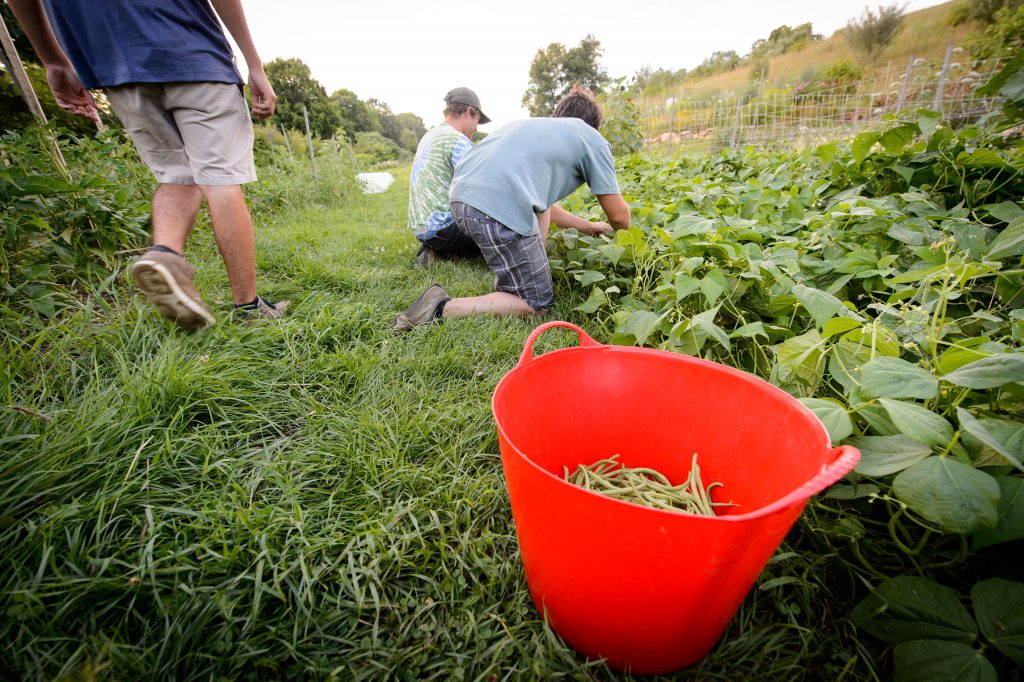
UConn’s departments of journalism and agricultural and resource economics have together created a new dual-degree program aimed at helping journalists specialize in agriculture, economics, and related policy areas.
UConn’s Department of Journalism and Department of Agricultural and Resource Economics (ARE) have worked together to develop a dual-degree program that allows students to simultaneously complete with a bachelor of arts in journalism and a bachelor of science in ARE. The dual degree was created in response to requests from journalism students interested in pursuing ARE as an additional area of study. The new program allows students to gain experience in applying journalistic perspective to economics, the environment, and related policy.
Emma Bojinova, a lecturer in ARE, and Maureen Croteau, professor and head of the Department of Journalism, worked together to formalize a plan of study for the program that allows completion of both degrees in four years while leaving room for electives and the fulfillment of all general education requirements.
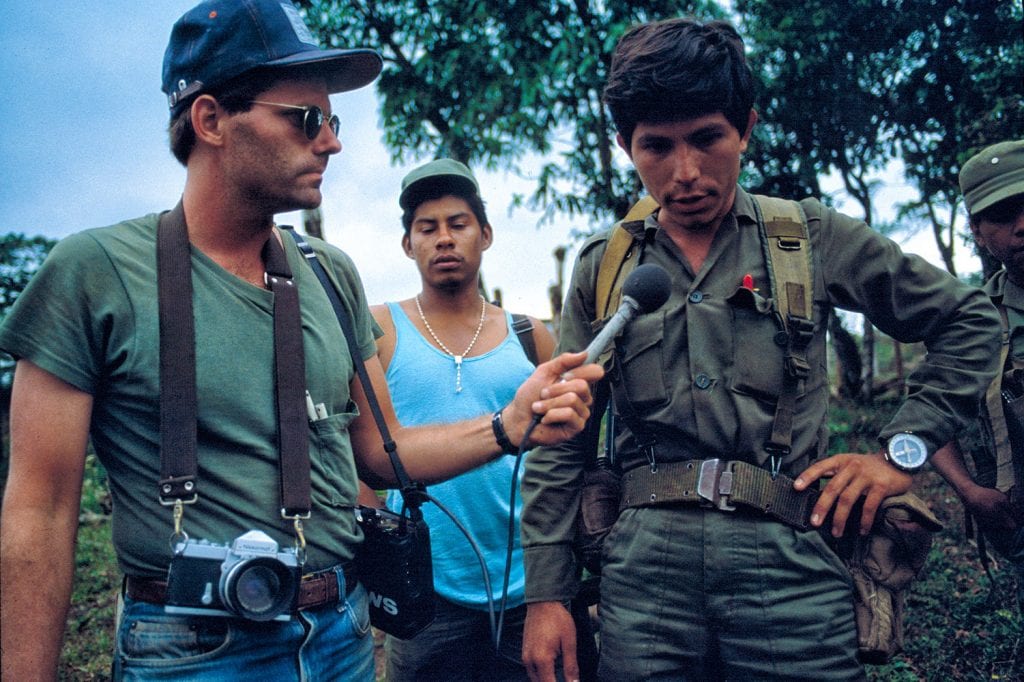
Scott Wallace interviewing an officer from the Sandinista Popular Army in Nueva Segovia, Nicaragua, 1984. (Photo by Bill Gentile)
Most kids who spent childhoods thumbing through the pages of the canary-yellow-framed National Geographics on their coffee tables, marveling at titular photos of exotic people and places, only imagined a day when they’d travel the world and see their own names attached to such stories and photos. Scott Wallace made it happen. Actively into his fifth decade of reporting, writing, and shooting stills and video for not just National Geographic but Smithsonian, Travel & Leisure, Harpers, and the like, the journalism professor illustrates his trade secrets and advice to students with real-life narratives that sound straight out of a big-screen blockbuster — one in which the pursuit of truth and justice is filled with as much trauma as triumph.
Telling us how he uses these exploits to illustrate the tenets he most wants to impart to his students, Wallace checks himself. “I don’t want to spend a lot of time talking about my own career, but I think I do have a rich trove of experiences to draw on.”
It’s an understatement. Wallace has traveled on assignment to the remotest of remote places on Earth and had a career most storytellers and adventurers only dream of. His recantations arrive humbly, however, with thoughtful pauses, counter questions, and intellectual insights that serve to remind he’s usually on the other side of the interview.
The logo for 'Crash Course' an election 2020 newsletter for first time voters in Connecticut produced by UConn Journalism students under the direction of Associate Prof. Marie Shanahan.
As the 2020 U.S. Presidential election and the COVID-19 pandemic collide, voters face new challenges, including how to cast their vote and where to find reliable information.
This semester, UConn journalism students launchedCrash Course: Election 2020, a digital newsletter created to provide non-partisan information for voters about their choices come Election Day.
They aim to cut through the noise to help young and first-time voters learn what’s at stake on their ballot, and why it matters.
“We put an emphasis on neutral and truthful perspectives, so there’s not a political outcome we’re going for,” says Allison O’Donnell ’20 (CLAS), a journalism major with a political science minor who is one of the writers. “We want people to make well-informed decisions and give them the knowledge they need to make an informed vote.”
The digital newsletter focuses on a new topic each week, mixing national and local headlines, including student debt, the Supreme Court, environmental issues, political debates, and more. The newsletter is part of Associate Professor of Journalism Marie Shanahan’s publication practice course on election coverage, and includes O’Donnell, Ashley Anglisano ’20 (CLAS), Fiona Brady ’21 (CLAS), Ben Crnic ’21 (CLAS), and Mike Mavredakis ’22 (CLAS) as writers, with Shanahan as the editor.
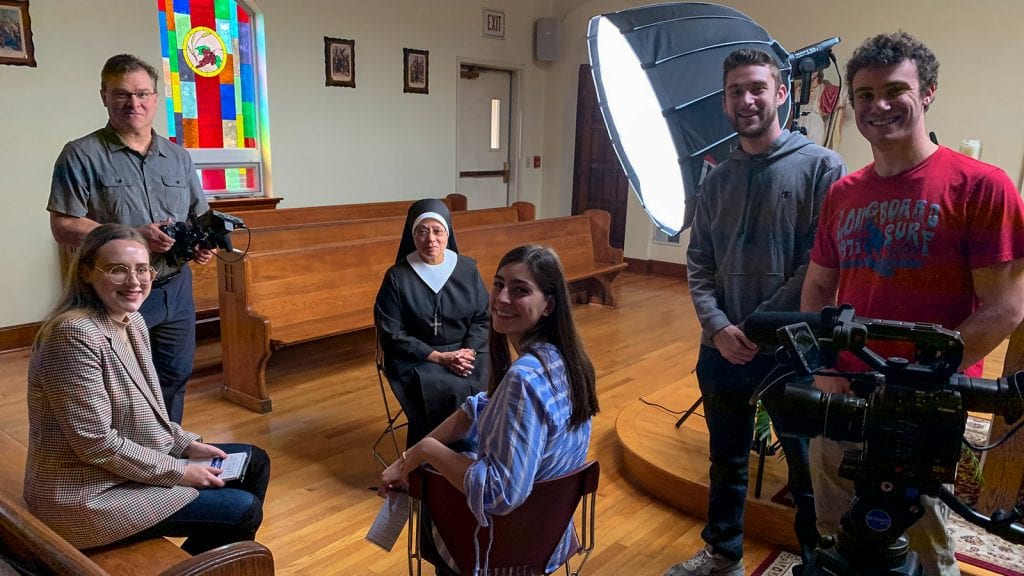
A scene from the making of the UConn Journalism documentary “Locked Out: American Dream in Jeopardy.”
A team of UConn students across various majors has completed a documentary film entitled “Locked Out: American Dream in Jeopardy.” The documentary tells the story of the undocumented immigrant community in Connecticut and the activists who are helping them adjust to life and navigate the legal system to find a path to citizenship.
“It was a real joy to work with these students on this project and it was a real learning experience for them,” says Steven Smith, a professor of visual journalism who guided the students along with Scott Wallace, another professor in the Department of Journalism. “They had to trust us because this was a tough story to work on. When you are working on a documentary, it is different because the script is being written as you are doing the interviews. That takes a lot of trust the first time you go through that process. Scott and I both wanted to inspire them about long-term projects and the difference that these stories can make.”
The film features interviews with U.S. Senator Richard Blumenthal, New Haven-based immigration attorney Glenn Formica, and Sister Mary Jude Lazarus, a Roman Catholic nun who serves the Hispanic community in Willimantic. Adding to the power of film are the words of an undocumented immigrant identified as “Margarita” out of her concern not to be known and Eric Cruz-Lopez, a DACA community organizer in New Haven.
Alexandra March is senior staff editor for the New York Times opinion section, she runs eight digital newsletters for the Times, including “Debatable,” with its opposing views on major topics. She was a journalism major from the start and she joined The Daily Campus in the commentary department.
“It’s strange to think that I was worried about accidentally eating unpasteurized soft cheese a few months ago, and now I am writing my will and preparing for the worst case scenario (while hoping for the best, of course),”Alexandra March ’10told us in April.
With her first child due in June, the self-described “type A, planner, worrier” is being forced to set aside her spreadsheets during a time that makes even type Cs consummate type As. “All this time I thought that the worst I would have to protect her from in the early days would be the common cold, and I would combat that by wiping off her tiny, ever-sticky hands, feeling like the most capable doctor in the nation’s best hospital. Now I realize that not only can I not prepare for her birth in a pandemic, but it’s also likely that a lot of her life will be beyond my protection. My spreadsheets will be useless. I’m forced to accept that I can’t plan for everything; I don’t have any choice but to be agile — no one knows what the world will look like in three months,” wrote March inThe New York Timesin April.
March doesn’t usually write for theTimes— she works behind the bylines. As senior staff editor for the opinion section, she runs eight digital newsletters for theTimes, including “Debatable,” with its opposing views on major topics. Her role encompasses a bit of everything for the opinion section’s digital realm, from co-running its Instagram with a colleague to working on push notifications, LinkedIn, Flipboard, and Apple News.
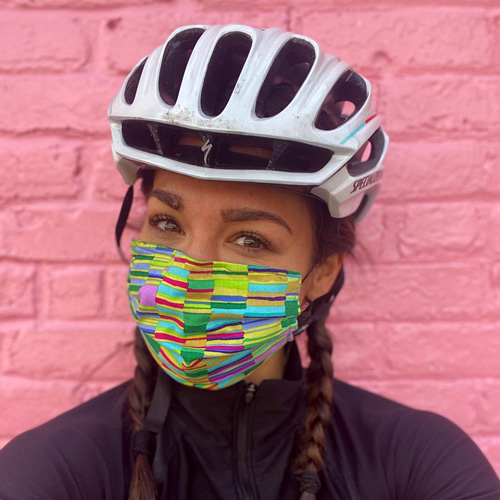
Emily Abbate graduated from UConn Journalism in 2010. She is the host of the “Hurdle” podcast and a fitness and wellness freelance journalist.
By JULIE (STAGIS) BARTUCCA ’10 UConn Magazine
“Wellness” may be among the biggest buzzwords of the past decade (not to mention a $4.5 trillion industry), but it has taken on new meaning as people the world over try to balance widespread uncertainty and stress with a new, socially distanced way of life.
“I think of wellness as the activities and habits that we develop to not only keep us sane but promote overall well-being and satisfy that itch to be a better version of yourself,” says UConn Journalism alumna Emily Abbate ’10 a freelance journalist and podcaster who believes her “mission as a human is to empower other people to be their best selves and to move with some sort of intention.”
On her podcast, “Hurdle,” she’s asked more than 100 guests — from Olympic runner Desiree Linden and celebrity trainers Jillian Michaels and Gunnar Peterson to Headspace co-founder Andy Puddicombe and The Meatball Shop restaurateur Michael Chernow — about their #HurdleMoment, a turning point that allowed them to break free of struggle through some form of wellness. You better believe she has a story of her own — and it started at UConn.
Abbate recalls sitting at her desk in Hicks Hall, procrastinating on homework one spring day at the end of her freshman year in 2007, when a digital scale tucked under her bed since move-in caught her eye. She knew she’d gained weight but had no idea how much and was shocked when “204” populated the screen.
“I got off the scale and threw on some old sweatpants and a hoodie and sneakers and did something that at the time was totally not instinctive to me at all, which was run down three flights of stairs and out the door.”
Less than a minute into her run, she collapsed into the grass.
“I was just so exhausted and beside myself, tears streaming down my face,” says Abbate. “I just knew that I needed to make a change.”
Since then, Abbate has lost (and kept off) 70 pounds, fallen in love with running, and completed eight marathons (she had planned to run her ninth in London in April before it was postponed due to the pandemic).
Exercise became such a part of her identity that she leaned hard into the niche a few years after graduation, eventually landingSelfmagazine’s fitness editor position. WhenSelfceased print publication in early 2017, Abbate became a full-time freelancer, with health and fitness stories published everywhere fromRunner’s WorldtoGQtoThe Wall Street Journal.
She not only talks the talk — “Hurdle” recently hit 1.3 million listens and was called “addictive” inThe New York Times— she walks the walk, too. When she decided to specialize in fitness writing, Abbate earned certifications as a run coach and personal trainer so she could always stand by her advice.
Her top tip for those looking to start a wellness routine, especially those looking to work out at home during the pandemic is, to borrow a well-known fitness-world slogan: Just do it: “Try what sounds good, and don’t be afraid to change it up if you don’t like that meditation app or yoga class,” she says.
The abundance of digital fitness classes being offered on Instagram, Facebook, YouTube, and Zoom while businesses are shut down means there’s something for everyone, Abbate told listeners on a late-April mini-episode of “Hurdle,” and technology means you can still set a date to work out with friends or family for motivation.
And remember — the point isn’t to achieve fitness excellence.
“Little, small habits lead to major change,” says Abbate. “The most important thing is that you started and are dedicated to making it a habit. The best part about ‘Hurdle’ is this constant reinforcing notion that hard stuff happens to all of us, but we are all capable of handling it,” she says. “It doesn’t matter if you’re the CEO of a publishing house or a world-class athlete, at the end of the day we all face our fair share of adversity.”
Still apprehensive? Remember that Abbate’s fitness life began with a 1-minute run followed by a flop in the grass. And despite all the marathons she’s now run, she says, “that night in the grass was my biggest victory.”
One of the great things about teaching at a university is that every spring we get to celebrate our students’ successes. We have a party. We meet their families. We take photos. Except for this year, of course. This year we had Zoom.
I feel so sad for the students, who deserved such a send off. But I also feel sorry for their friends and family. And for our department. And for me. We get very attached to our students. Every year I teach our First Year Experience course for pre-majors and the final portfolio course for seniors, so I see many of them in their first course and in their last. In between, I smile as I see them appear professionally dressed – from the waist up – to anchor a production in our studio. I wait for their postcards when they study abroad. I rejoice when they get their first jobs.
This year we had COVID-19.
I tell every graduating class that I will miss them, and that has never been more true. But the Class of 2020 needs to know that our alumni are always part of us. We are here for you. And we could not be more proud.
Stay well, and stay in touch.
Maureen Croteau
Professor and Head, Department of Journalism