Other

What’s New in News? A Podcast by Department Head Marie Shanahan

Here's a fun and wide-ranging interview of UConn Journalism Department Head Marie Shanahan and another UConn Journalism graduate, Mike Enright, on the state of news and journalism today.

Marie describes the different ways the students are taught to report and cover the news and that they are encouraged to work for The Daily Campus, WHUS Radio, UCTV and UConn Nutmeg Publishing to gain more experience outside of class.

"At UConn, we train our student journalists to be accurate, ethical, and rigorous—to tell the truth. If they’re unsure, it doesn’t go in the story," she said. "And we emphasize practice. Students can get involved in so many ways before they graduate.

Give the episode of the UConn 360 podcast a listen here: https://uconn.edu/uconn360.../episode-165-whats-new-in-news/

CT Community News is Promoting Some Top Journalism by UConn Students

UConn Journalism student Kara Hochdorfer interviews then-Mansfield Town Manager Ryan Aylesworth at a town council meeting in February 2026. Photo credit: Julia Casola


Since August 2025, more than three dozen stories, photos and videos produced by UConn Journalism students from their classes have been published professionally by CT Community News.

The site on Substack is a news outlet led by UConn Journalism Lecturer Harriet Jones and sponsored by the CT Student Journalism Collaborative. Jones, UConn Journalism Department Head Marie K. Shanahan and professors Julie Serkosky and Kate Farrish co-founded the nonprofit in 2023 with journalism professors around the state to fill a niche. As student internships were declining statewide, the professors wanted to find an outlet to professionally publish their best students’ work.

Jones and other leaders of the collaborative then built partnerships with a number of news outlets, including CT Public, the Hartford Courant, the CT Mirror, WSHU and CTNewsJunkie, that are regularly republishing the student journalism from UConn, CT State-Manchester, Southern Connecticut State University, Central Connecticut State University, and other universities.

The students have been thrilled to see their work published, and they often say their extended families are excited to see their work as well.
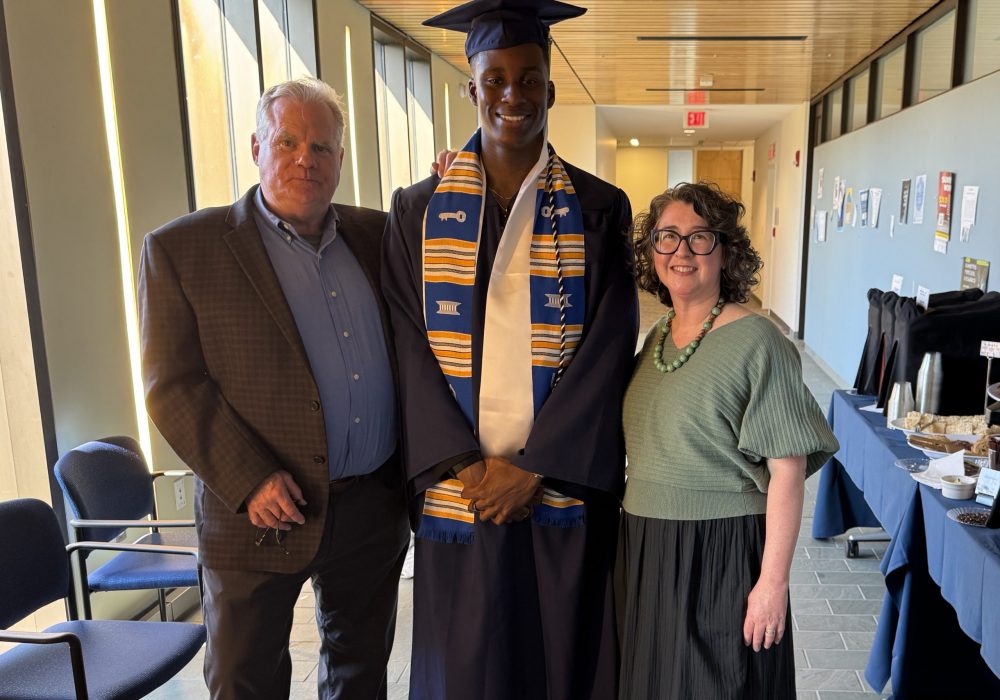
One of them is Kwasi Osei-Amankwah, a recent UConn journalism graduate, who won a statewide Society of Professional Journalists award for his story on the job prospects and worries of the Class of 2025.

“It was a turning point in my writing career, allowing me to have a story published at a time when I had never imagined it possible,” he said. “I am eternally grateful for this incredible experience.”

Prof. Serkosky’s Students Revealed Solutions to Mental Health Issues and Not Just Problems

Prof. Julie Serkosky’s Publication Practice students Sara Bedigian, Mikayla Bunnell, Bridget Bronsdon, Krystal Johnson, Anyssa McCalla, Sidney Haywood and Gianni Salisbury

Prof. Julie Serkosky’s Publication Practice class devoted its spring semester to a Solutions Journalism Network-funded project by reporting and writing eight stories that each took a deep dive into aspects of campus mental health. The class was part of the Solutions Journalism Network’s 2025-26 Student Media Challenge cohort through the nonprofit Connecticut Student Journalism Collaborative. Serkosky, UConn Journalism Department Head Marie K. Shanahan, Prof. Kate Farrish and Lecturer Harriet Jones are among the co-founders of the collaborative. Jones serves as its editor.

National research shows that the number of young people in the U.S. experiencing serious mental health challenges has been on the rise for more than a decade. Serkosky and her students received training on the rigorous Four Pillars of Solutions Journalism and sought to find programs that were working to address these challenges. Every story involved discussion with and advice from Solutions Journalism Coordinator Sharon Bloyd-Peshkin.

Mikayla Bunnell focused on pet therapy, which has grown in popularity at UConn and other universities in recent years. Her story, Dog therapy catches on at UConn, other colleges across the U.S., was published by CT Community News and republished in the Hartford Courant and the CT Examiner.

Bunnell was most excited about the hands-on nature of building a solutions story, attending therapy sessions and observing interactions.

“I spent a lot of my time listening rather than asking questions,” she said. “I got first-hand experience with the solution I was writing about, which I think helped me explain the concept better and benefited my story overall.”

Gianni Salisbury said she had to do extensive research to nail down her story about student bereavement.

“For this story, I had to talk to experts for inspiration first because the solution was not obvious or previously reported on,” she said. “It was something I had to find and something only people in the field of grief and college policy knew about.” The resulting story, Grief, loss and the college student, explains that up to 44% of college students experience the death of a loved one during any two-year period in school.

Student reporter Gianni Salisbury (left) talks about learning Solutions Journalism with CT Examiner’s Robin Breeding.

The solution highlighted formal student bereavement policies that can guide those who are grieving and help support them as they continue their education.

Senior Sara Bedigian followed these principles in her story on Sandy Hook survivor Audrey Nichols, who is striving to pass gun violence prevention legislation.

“When I conducted the interview with Audrey, it was challenging but I used the narrative techniques we discussed, which helped,” Bedigian said. “I have not interviewed someone before who had experienced the trauma she did. When I told her about the solutions lens and how I am going to focus the story on her advocacy, it made the story easier for me to tell and for her to open up and share.”

UConn SPJ: A 2025-2026 Year In Review

By Sara Bedigian, UConn Journalism

The UConn Society of Professional Journalists had a successful academic year! Led by President Sara Bedigian, Vice President Daniel Stark, Social Media Chair Katie Servas and Treasurer Mikayla Bunnell, the chapter hosted nine networking events across different fields of journalism and expanded outreach throughout campus by bringing in more journalism students.

Fall 2025 was focused on hosting events about different modes of storytelling. To kick off the year, the chapter hosted a Radio Night, in collaboration with UConn’s student radio WHUS and guest speaker Robyn Doyon-Aitken from CT Public about how to begin a career in radio and audio journalism. Sports Night in October brought in Adam Giardino and Dom Amore, two prominent Connecticut sport journalists who talked about their respective careers in print and broadcast sports journalism and covering the prominently successful UConn basketball teams. A photography workshop in November brought in Sarah Gordon, multimedia journalist and photographer at The Day in New London, who talked about her career in photography and multimedia, allowing students to ask questions about her work and how to begin a career in the field. SPJ executives also attended Media Fest ‘25 in Washington D.C. to represent the journalism department on a national stage.

Spring 2026 was focused on an alumni speakers series in collaboration with the UConn Journalism Department, where students enjoyed learning how someone who graduated with the same degree got to where they are today. The chapter’s first event in February 2026 welcomed Diego Cupolo, a 2006 UConn journalism alum and freelance foreign correspondent. Several students attended to learn about Cupolo’s experiences reporting around the world as an international journalist, before relocating to Turkey and starting his own newsletter.

In February, the chapter hosted its annual resume workshop with department head Marie Shanahan. This event allowed students to learn about how to craft a journalism resume to appeal to employers and editors in the industry.

The chapter collaborated with Connecticut Foundation for Open Government and the UConn Journalism and Political Science departments to host Katie Sanders, the editor-in-chief of PolitiFact in April. This conversation was centered around fact checking, AI and what to expect in the upcoming election year. Many chapter members attended the event and asked questions during the discussion that revolved around FOI and First Amendment protections.

To end off the alumni speaker series, the chapter hosted multimedia editor and graphics journalist Charlie Smart, who discussed his career and experiences traveling globally to report stories at the New York Times. At the department’s annual scholarship night, the chapter helped host Jackie Wattles, the space and science reporter at CNN who talked about her career in science journalism after she graduated from the department in 2014.

At the start and end of each semester, the chapter hosted mixer events for members where they could meet other students in the major and related fields and learn about how to get involved in student media on campus.

To keep up with the chapter, follow it on instagram @UConn.spj.

Evan Hill and the Rise of UConn Journalism

By Ben Gingold | UConn Journalism
May 2026

During Evan Hill’s tenure as a professor and Journalism Department head at the University of Connecticut, he was known by his students as a stern man who had no tolerance for tardiness.

“Evan was a stickler for a lot of things, including showing up on time,” recalled Steve Hull, a UConn alumnus who went on to work at The Day newspaper in Connecticut and become founding editor and publisher of Bethesda Magazine in Maryland. “If you were 10 seconds late, he would knock on the door, he would wave at you, and then go back to teaching. And you were left out there in the cold.”

Beyond the papers riddled with editing marks that Hill was also known for, was a man who truly cared for his students both inside and outside of the classroom.

“He'd be so tough on them in class and send their papers back to them covered with red ink, and then he'd invite them to his house,” his daughter Lucinda Hogarty said. “My mother would make this huge pasta dinner that we used to call slumgullion … and all the students would just crowd in our living room and have a good time.”

Hill became UConn’s Journalism Department head in 1965 at then-UConn President Homer Babbidge’s personal request. Hill helped create the journalism major in 1979, and his legacy and teaching remain core values of UConn’s journalism program.

Hill was a war veteran, a seasoned reporter and a skillful educator. He graduated with a bachelor's degree from Stanford in 1948 and a master's degree from Boston University in 1950 before ending up at UConn. Hill died on April 10, 2010. He was 91 years old.

“Once you got over being terrified of him and intimidated by him, you could learn a great deal and realize that he very much cared for his students,” Hull said. “He taught me beyond how to be a journalist, just the value of hard work and of integrity in your work.”

In 2010, the Evan Hill Fund for Excellence was founded to support UConn Journalism. The Evan Hill Fund is an endowed donor fund that directly supports the growth of the Journalism Department.

The fund enables the Journalism Department to invite guest speakers, hold student events and help pay for travel and general programming. The idea is to continue Hill's legacy of journalistic excellence by providing aspiring journalists with the tools necessary for their success.

Embarking on the Adventure of a Lifetime

From an early age, Hill took an interest in writing. Hill's father worked at an Alaskan salmon cannery and was a writer in his free time. He wrote numerous books detailing the many things he saw in his time in Alaska.

“My father knew about that, and my grandfather talked to his kids quite a lot about it,” Hogarty said.

These stories not only would inspire Hill to take up writing himself, but would create a lifelong bond with Alaska and its people.

One summer, Hill decided to leave his high school in Bellingham, Washington, and go on the adventure of a lifetime. Salmon canneries often would recruit high school students in his area for work, and Hill jumped on the opportunity.

Hill spent three summers working in the canneries of Alaska, according to his daughter, slowly falling in love with both the 49th state and the people who lived there. After a few years of college in Washington state, Hill decided this path was not for him. He dropped out of school and headed back to the place he knew best: Alaska.

In Juneau – a town small in population but enormous in land mass – Hill would come upon his first job in journalism. He started as a beat reporter for a local newspaper and steadily moved up the ranks. This was a high-stakes, fast-paced environment, with Hill working under rigorous editors who wanted the facts fast and accurate. There, he would begin to flourish, with Hill's time in Alaska a formative experience that served as the backbone of his future journalistic prowess.

“It really did shape him,” his daughter said.

A few years later, Hill would join Alaska National Guard during a time when Alaska was still a U.S territory. With the onset of World War II, the National Guard was federalized and Hill was now part of the infantry.

Before he knew it, he was serving with the 79th Infantry Division on his way to France. In his short time in the Army, he rose from an infantry enlistment to captain of his division. In 1944, he would suffer a severe leg injury, leading to his honorable discharge.

“He took shrapnel to his leg in France and was sent home. He didn't lose his leg, but it was a problem for the rest of his life. He had a pretty bad limp,” Hogarty said.

Hill, now a Purple Heart recipient, was sent back to California to be close to his family during a lengthy recovery process, Hogarty says. “He was inpatient for two years, and then he was an outpatient for another two years getting rehab, but there were a lot of setbacks.”

Hill never forgot about his years in Alaska. He would spend the next few years making visits to Alaska to visit his old war buddies, Hogarty says. During one of these visits, he locked eyes with a young Priscilla Fiske, who was serving as part of the U.S Coast Guard. They quickly began to bond, and got married in the summer of 1946.

When the war was over, Hill went to Stanford University on the G.I Bill, graduating with a bachelor of arts degree in 1948. During his time at Stanford, Hill would take numerous classes taught by the American novelist Wallace Stegner, which helped develop his prowess for narrative writing.

“He talked about the color – you know – bringing color into your stories so people can picture it. He said to be direct, be succinct, be factual, but also have the language carry you along with the story,” his daughter said.

The family moved to Newport, New Hampshire, and Hill served as an editor of a weekly paper. In 1950, he earned his master’s degree in journalism from Boston University. Hill would spend six years teaching at his alma mater before a brief stint at Ohio State University. Hill moved back to Newport in 1957, where he would find work as a freelance writer for numerous magazines.

“Before he went to UConn, the bread and butter in our family, what he was earning money doing, was cover stories for the Saturday Evening Post,” Hogarty said.

The magazines of the 1960s were very different than today’s cultural zeitgeist of celebrity gossip. In this era, magazines were often long, narrative-driven pieces that gave an in-depth look into a topic. Each story would take Hill months to complete, with endless hours being poured into interviewing sources and digging through documents, his daughter recalls.

“He would be assigned a story once every six months or so, and it would be six months’ worth of travel and research. And one, I remember, was about American medicine, the state of American medicine. So, talked to medical students, hospitals, and the American Medical Association, and compared it to other countries. Tons of research,” Hogarty said.

One morning in 1965, Babbidge, who was at that time UConn’s president, drove from Connecticut to New Hampshire unannounced and showed up on Hill's doorstep. Babbidge pleaded with Hill to come work with him to establish a journalism program at his university.

Hill took up Babbidge on his offer. Before Hill's involvement, journalism at UConn was overseen by the university’s chief of communications.

“I think Homer gave him a lot of leeway in what this department was going to look like, and Dad made sure that there were rooms. I mean, think about this, this was in 1966. One of his classrooms was a room filled entirely with manual typewriters,” Hogarty said.

During this time, journalism wasn’t a major at UConn, but a minor field of study. And while only a few rudimentary journalism classes were offered, that didn’t stop Hill's early students from going on to achieve great things.

“It was a small program, two full-time faculty members, but led by two extraordinary faculty members,” said Maureen Croteau, or – as Hill would call her when she was his student – “Ms. Croteau.”

During his time as department head, Hill was heavily involved in the student newspaper The Daily Campus and ruled with an iron fist.

“The first time I met him was in the spring at The Daily Campus banquet,” Hull, his former student, recalled. “The editor took me over to meet him, and when I went over, the editor introduced me, Hill turned around and said, ‘Mr. Hull, you libeled more people in one semester than I did in my entire career.’”

Despite his abrupt manner, Hull recounts that Hill was “one of the two or three most influential people in my life.”

Marla Romash was a student field hockey player when she met Hill. She was fed up with a lack of coverage and marched down to The Daily Campus. When she confronted Hill, he told her, “If you want coverage, you've got to do it, you’ve got to write it.” Less than a year later, Romash was co-sports editor at The Daily Campus.

“He did more to make me see myself as a journalist and see myself in the world than I think anybody else,” Romash said.

Kate Farrish is now an assistant professor-in-residence in UConn’s Journalism Department, but 45 years ago, she was sitting in a chair next to Hill anxiously awaiting his feedback. Farrish was one of the first students to receive a journalism degree from UConn, and credits Hill with the department’s success.

“He’s really the architect of the department, the founder, and was the driving force,” Farrish said. Farrish worked alongside Hill on her honors thesis and was no stranger to his exacting nature. She now sees herself revisiting many of the same assignments that trained her to be a journalist.

“More than 40 years later, I’m still teaching the same thing,” Farrish said. The most memorable of these assignments is known as “sudden death.”

In these sudden-death assignments, first-year journalism students are tasked with going out on campus, finding a story and writing it during a single class period.

“For more than 50 years, students have had that rite of passage,” Farrish said. “I distinctly remember doing that in 1980.”

After a career spanning nearly 20 years, Hill retired from the UConn Journalism Department in 1984 and passed the department head torch to Croteau, one of his protégés. Hill moved back to Newport and became active in his community.

He would spend his later life teaching creative-writing workshops at his local middle schools and serving on several town boards. Hill was also part of conservation groups that included the Society for the Protection of New Hampshire’s Forests, which aimed to protect New England’s wildlife.

Hill’s impact on his students didn’t end in the classroom, as the bonds he shared with his students would last a lifetime. After graduation, Hill was known to stay in close contact with many of his students, according to Hogarty.

“It was not just a teacher-student relationship. It was really, you know, you’re a person, I’m a person. We both have something interesting about us,” Hogarty said.

Hull recalled staying in touch with Hill for many years post-graduation, sending letters back and forth and even visiting him in New Hampshire.

When Hill died, his family was both shocked and touched by the number of former students who showed up to mourn the loss. “There were people at Dad’s funeral who were his students 40 years before,” Hogarty said.

One former student even brought papers Hill had graded.

“One of the people who was a former student of his came to the memorial service we held for him, with some of those edited papers that she had submitted and waved them around. ‘Look at the red ink,’ the student said. ‘This is what we had to deal with in getting and taking a course with Mr. Hill.’”

Over 50 years later, UConn’s journalism program still feels Hill’s impact. From rigorous fact-checking to proper Associated Press style, the core principles of Hill’s teaching have shaped UConn journalism into the program it is today.

“The fact that he built a program that had staying power and is still going is the most important part of his legacy,” Romash said. “He had a commitment to excellence and a commitment to what journalism should be.”

Hill's alumni have worked for news outlets that range from The Wall Street Journal to The Hartford Courant and “Good Morning America,” with many former students crediting Hill with their success.

“He made me a journalist. That’s all I would say,” Croteau said.
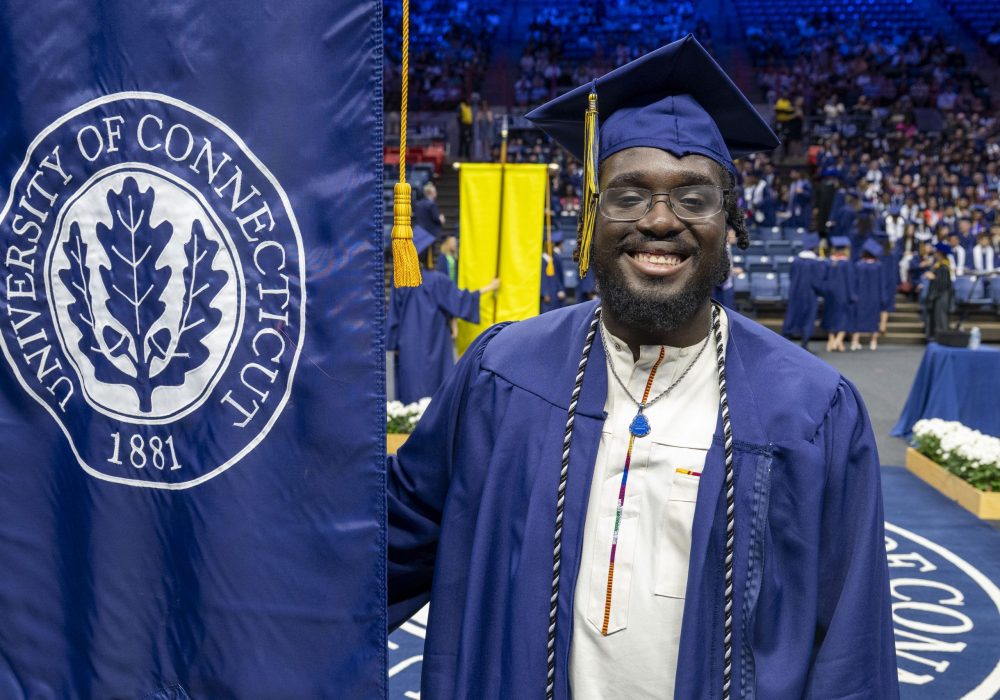


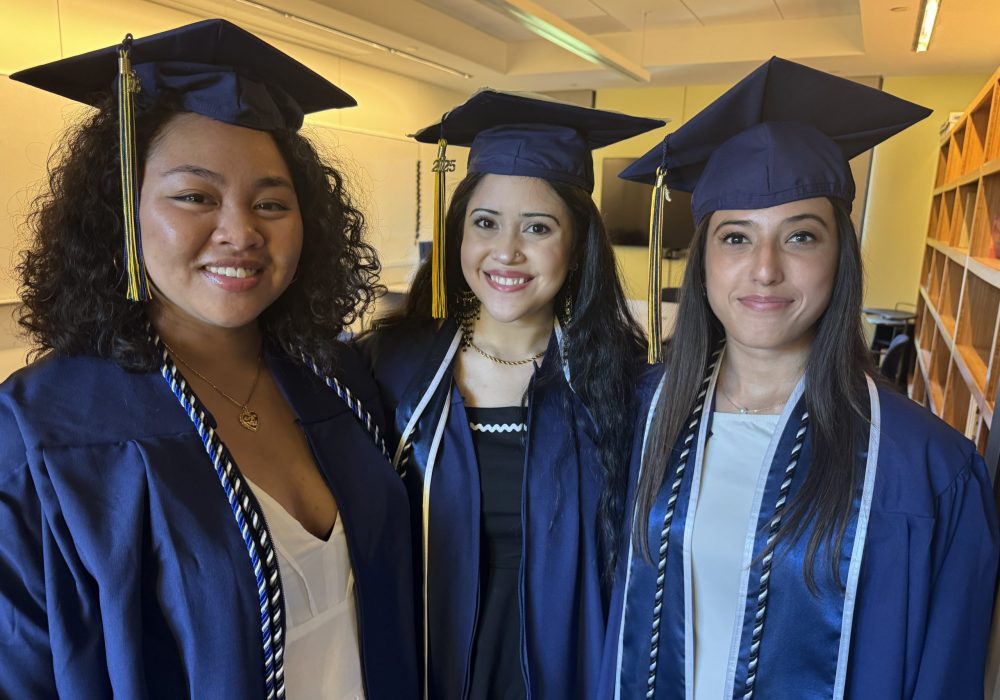
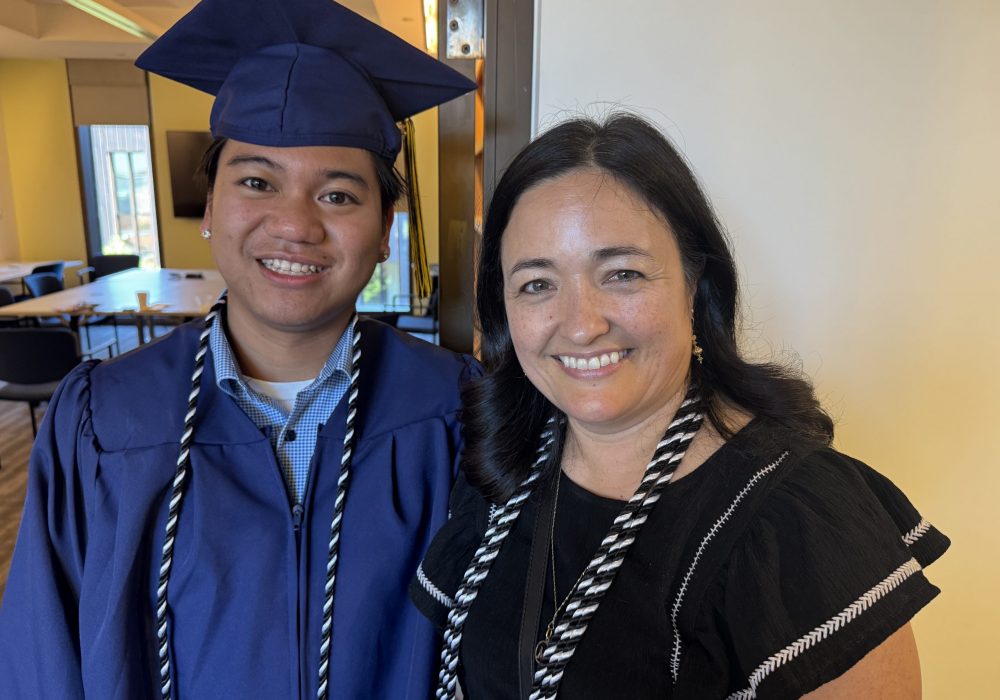
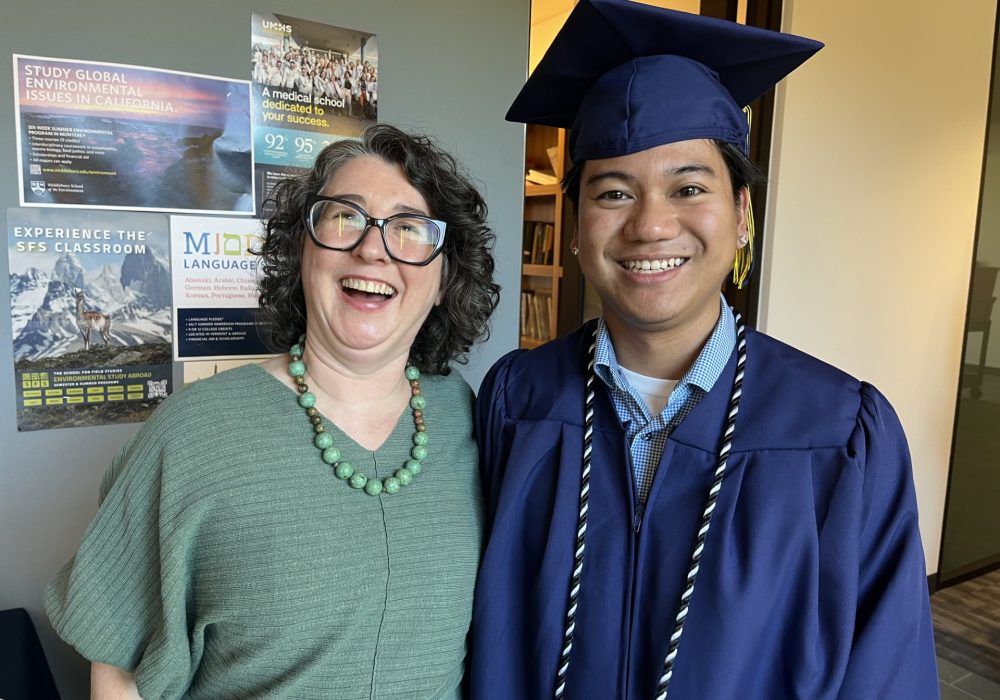
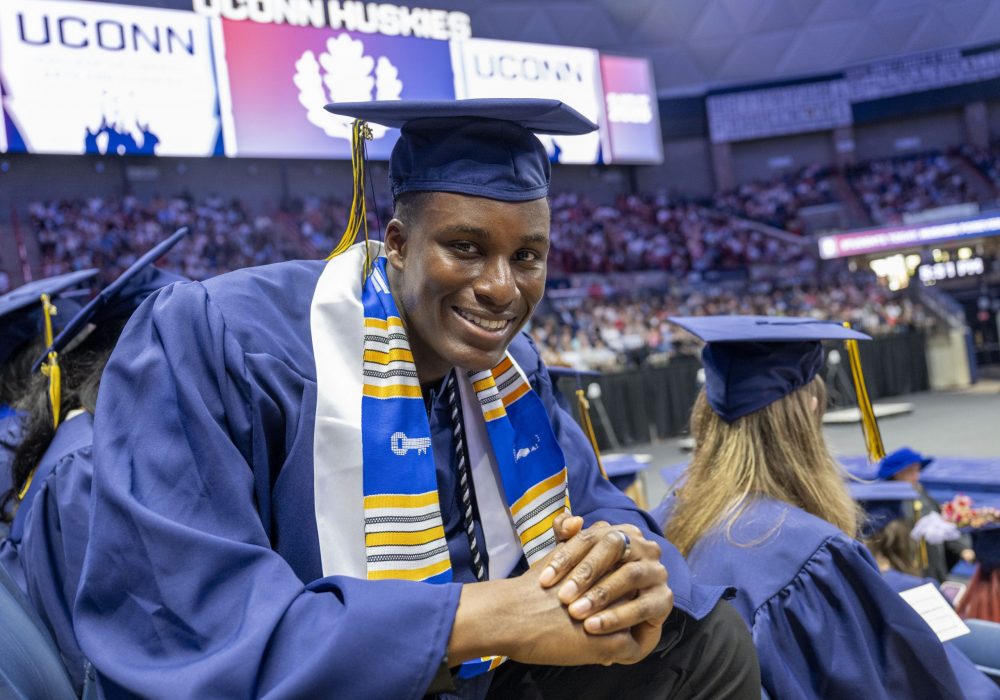
Congratulations to our 2025 UConn Journalism graduates

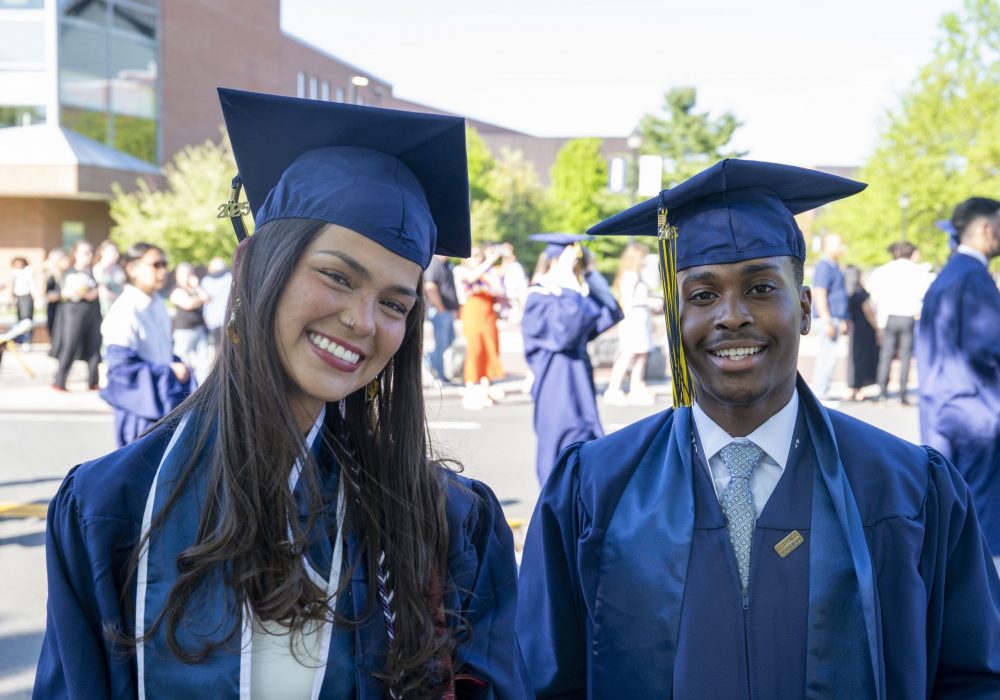
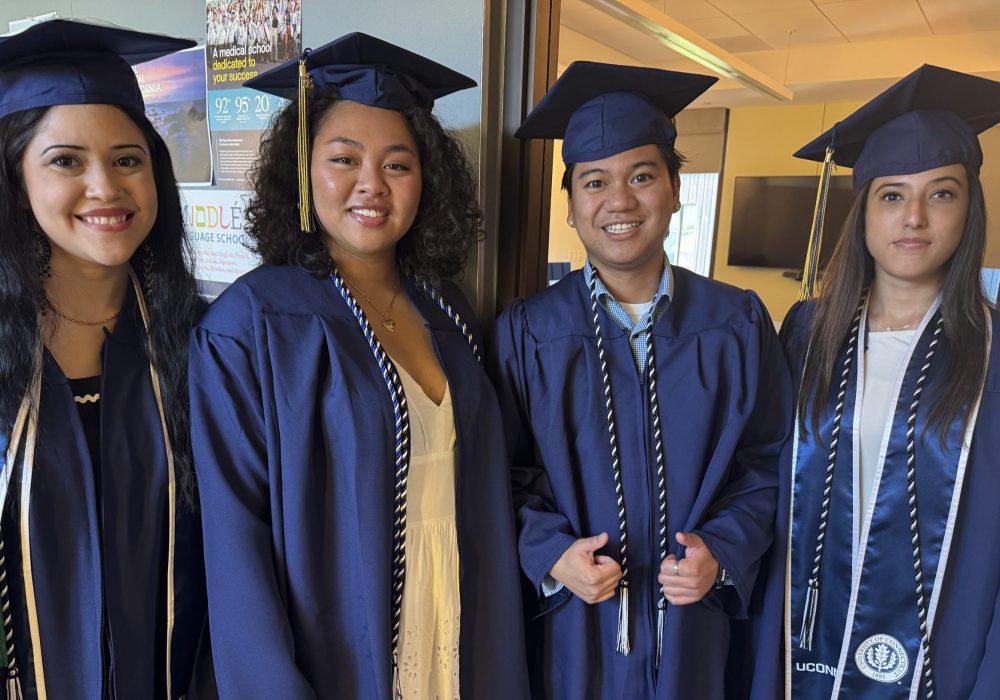
UConn Journalism celebrated the Class of 2025 during our annual commencement reception on Sunday, May 11 as students prepared to cross the floor of Gampel and join more than 280,000 alum who represent UConn and Husky Nation across the globe.

Students shared stories, memories and values that they have learned throughout their four years with our department, and how they will cherish these for a lifetime.

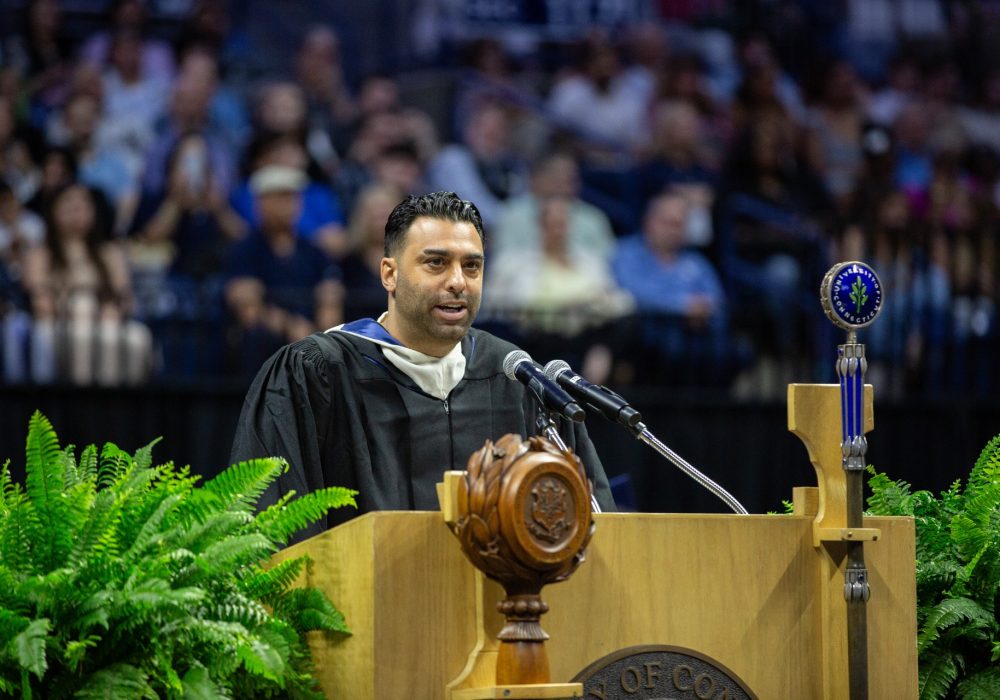
We wish our graduates nothing but success and remind each and every one of them that our door is always open. In the words of Joe La Puma, CLAS Commencement keynote speaker, and 2005 UConn Journalism alum, “Today marks the start of the next chapter in your story. You don’t need to have it all mapped out, but focus on what sparks your passion.”

La Puma ended his commencement speech with an extra shout-out to the Journalism Department: “Keep it up.”

  • A student smiles, in graduation attire, as he stands next to a university of Connecticut banner that displays the school’s seal.

2024 UConn Journalism award winners and scholarship recipients

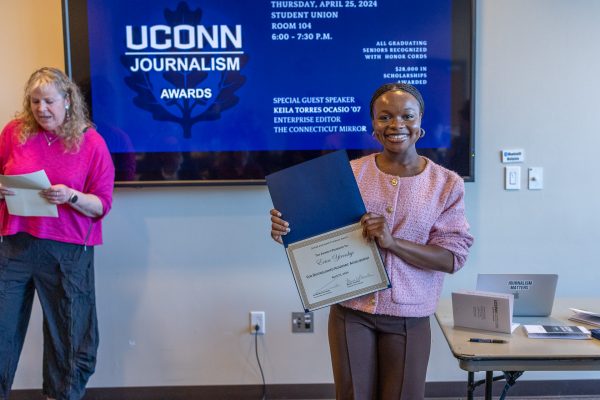
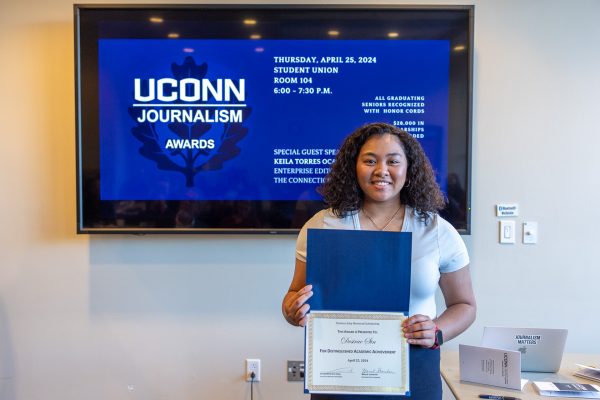
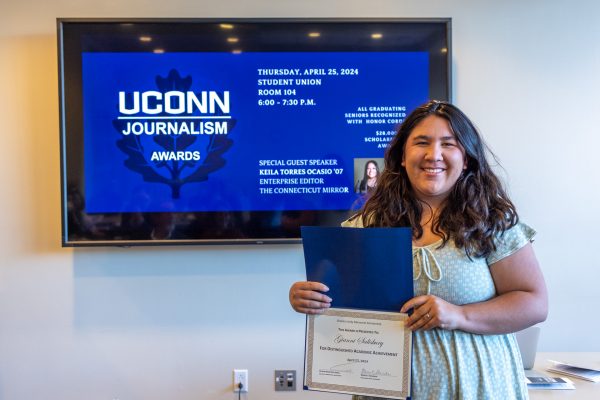
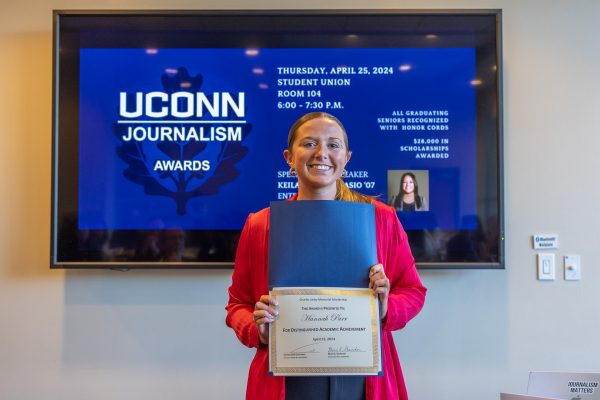
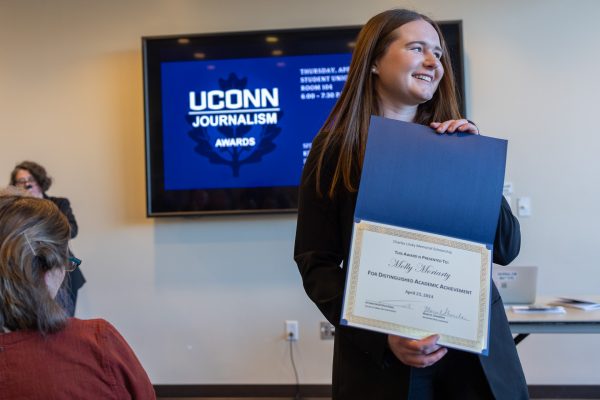
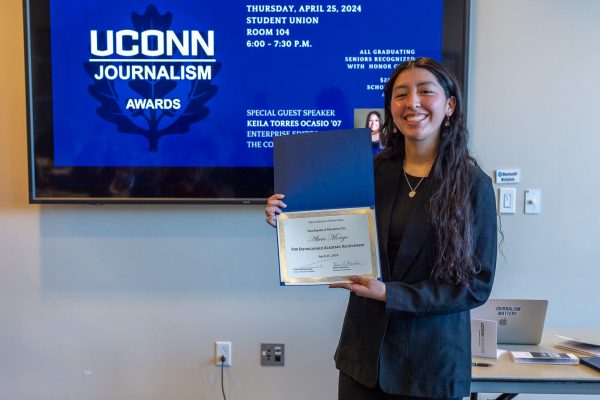
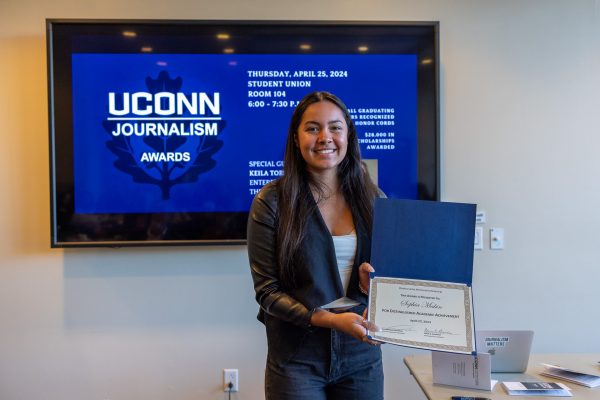
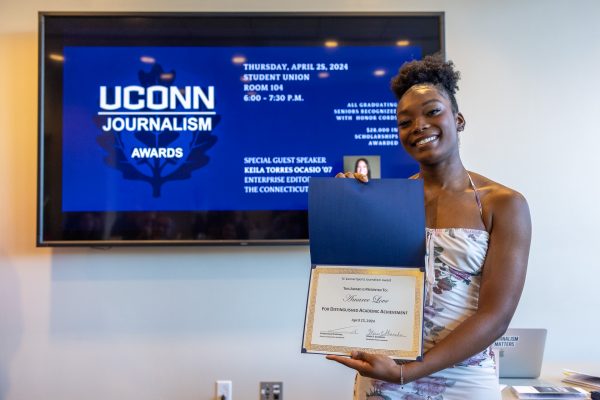
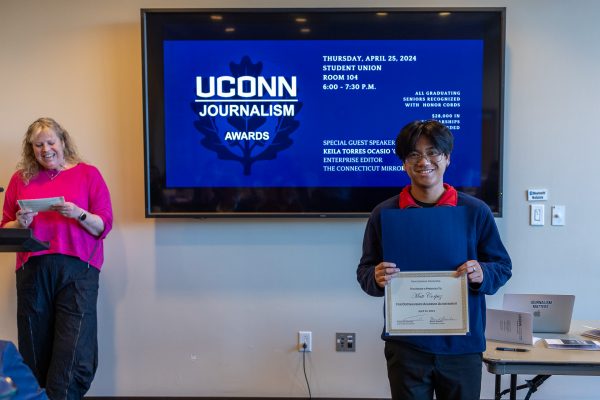
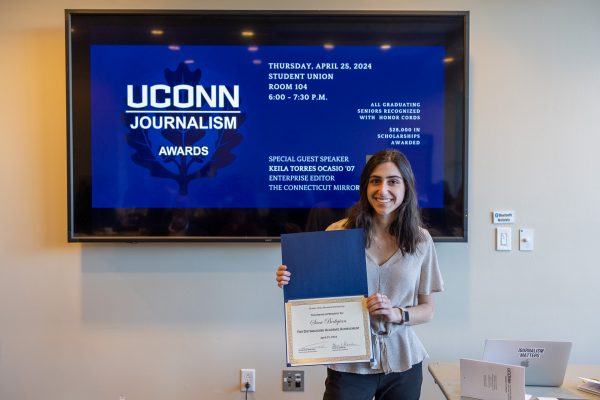
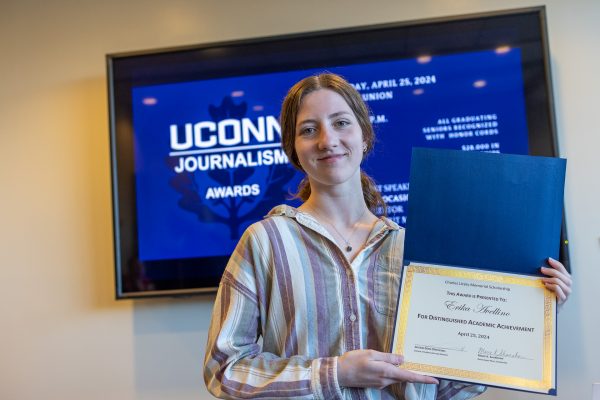
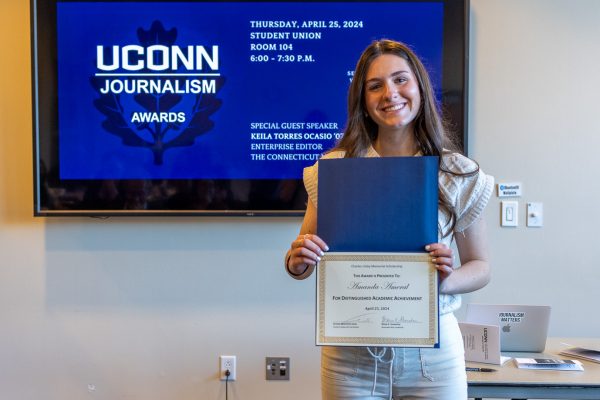
We celebrated our favorite event of the academic year on April 25, 2024 — UConn Journalism’s annual awards night. Congratulations to our 19 winners, who received a total of $27,000 in scholarships, and to the 39 members of the Class of 2024, who received graduation honor cords at the ceremony.

The featured event speaker was alum Keila Torres Ocasio ’07, who is enterprise editor at The Connecticut Mirror. She encouraged students to lean into their curiosity and ‘nosiness’ as journalists to help them uncover important stories and opportunities in their own careers.


Scholarship winners by award:

Donald and Jewell Friedman Award
• Erica Yirenkyi
• Kaily Martinez

Charles Litsky Memorial Scholarship 
• Erika Avellino
• Mikayla Bunnell
• Sophia Makin
• Sara Bedigian
• Daniel Stark
• Amanda Ameral
• Gianni Salisbury
• Hannah Parr
• Desirae Sin
• Molly Moriarty

Sheehan Family Journalism Scholarship
• Anna Heqimi

John Breen Scholarship
• Delan Li

Dave Solomon Scholarship
• Matt Corpuz
• Jalen Allen
• Alicia Monge

Terese Aronoff Karmel Award for Sports Journalism
• Amaree Love

Michael J. Whalen Journalism Award
• Delan Li

Barbara K. Hill Award
• Amanda McCard

Special guests at the April 25 event included emeritus professors Maureen Croteau, Wayne Worcester and Marcel Dufresne, and John Hill, the son of the late Barbara Hill, whose memorial scholarship supports the junior UConn journalism major with the highest GPA.

UConn Journalism collaboration with The Day wins recognition from NENPA

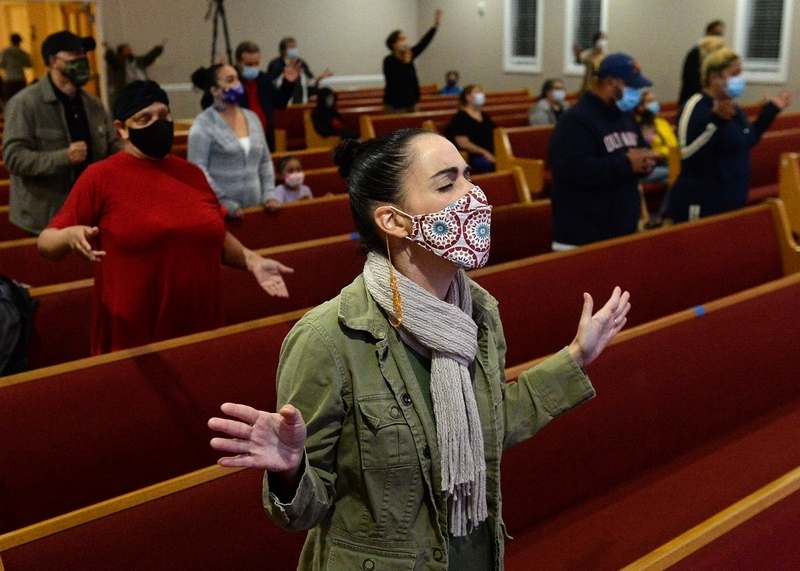
"Spirit of the City" is a 2020 project reported by UConn Journalism students and faculty and published by The Day.

Congratulations to Profs. Gail B. MacDonald and Maureen Croteau, The Day newsroom and the team of UConn Journalism students who worked on “Spirit of the City,” a series of stories about New London's diverse faith communities and the extensive outreach and social justice work they perform.

"Spirit of the City" was awarded first place in "Excellence in Newsroom Collaboration and Partnerships" at the 2022 New England Newspaper & Press Association awards.

The judges noted that the successful collaboration between the Southeastern Connecticut news outlet and UConn Journalism gave students the opportunity to work with professional journalists and have their work published. The added resources and relationships built made this a winning partnership, the judges wrote.

The students (now alumni) who worked on the project were: Kevin Arnold, Olivia Hickey, Daniela Luna, Allison O'Donnell, Maxine Philavong and Joseph Villanova.

Professional headshot photo sessions for UConn Journalism seniors

Need a professional headshot photo? Sign up to get one taken on Wednesday, April 20 or 27 in OAK460.