By Lily Goldblatt, UConn Journalism
June 4, 2026
As the United States approaches its 250th birthday, the country has never been so divided. Polarization and political tensions are at an all-time high, and Americans seem to have lost sight of one another’s humanity.
Steven G. Smith, a Pulitzer Prize-winning visual journalist, is disturbed by this trend.
“Lots of times we can ‘other’ people, and we can think ‘Oh, they’re different than us.’ But the reality is, they’re really not,” Smith said. “In the end, we’re all humans, you know, and I think kindness is overlooked, and I think civility is overlooked, and that’s kind of heartbreaking to me.”
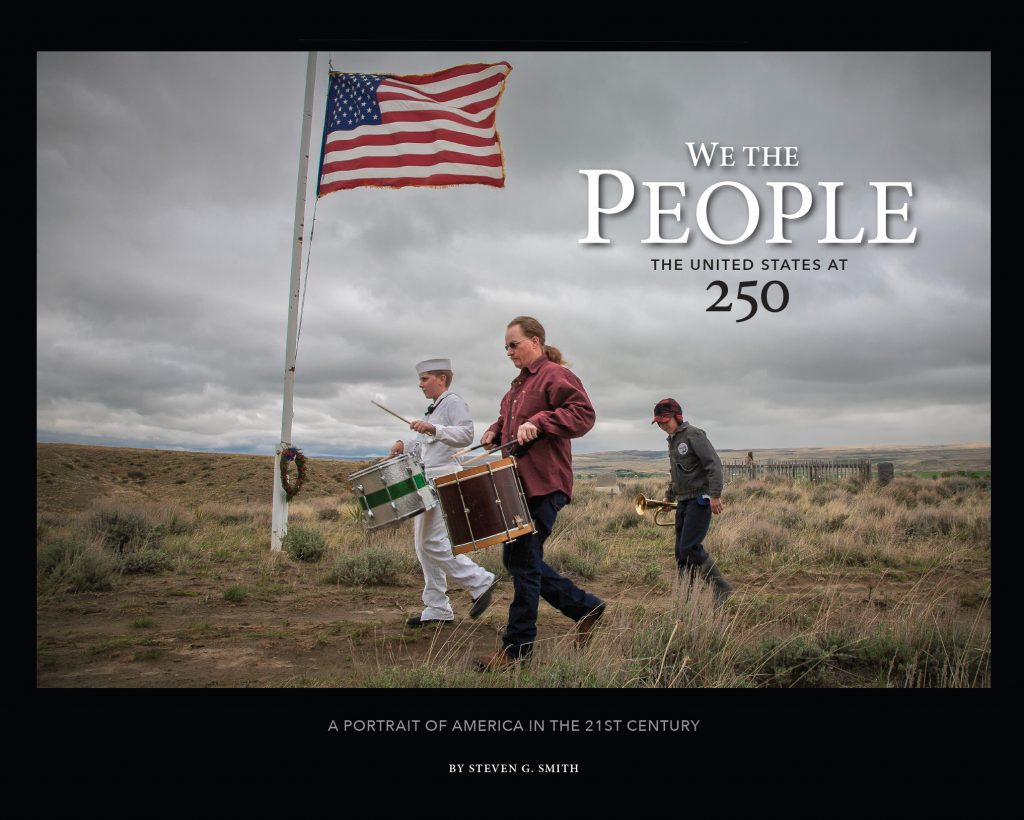
Smith, who won the prestigious Carnegie Fellowship award in April 2025, has announced his retirement from UConn after 13 years as a journalism professor. He plans to continue to work on his long-term documentary photo essay “We the People,” which explores American identity in the 21st century at the nation’ssemiquincentennial.
Smith was born in Kansas City, Missouri. but his family moved to Washington state after his father, a school administrator, took a job there. His mom worked odd jobs but was mostly a homemaker. When Smith was in elementary school, the family moved again, this time to Africa. This would be a formative experience in regard to his future career as a visual journalist.
“Where we were at was an area that really celebrated the visual arts and storytelling,” Smith said.
After two years in Africa, the family returned to Washington.
Smith would meet his wife, Gwyn, while attending Eastern Washington University, which he entered as an engineering major.
“I had like an internship doing drafting and doing kind of mechanical engineering work,” Smith said. “It just didn’t feel like it was for me.”
Smith switched his major to photography after taking a photography class that he loved. He then found his college newspaper and took several journalism courses.
After graduating in the mid 1980s, he worked as a staff photographer for a number of publications.
One of his first major stories involved documenting the reintroduction of the gray wolf into Yellow Stone National Park in the mid-1990s for the Billings Gazette, a controversial event due to concerns about the ecosystem in the area.
“I was able to photograph when they first brought the wolf back in and, you know, where they actually kept the wolf in a captive pen for the first winter,” Smith said.
In 2002 Smith photographed wildfires in Colorado for Rocky Mountain News and won a Pulitzer as part of the newspaper’s team.
In addition to his own photojournalism, Smith has also enjoyed teaching photography.
“My father was a teacher, and I had siblings in education, so it was always potentially at the back of my mind,” Smith said. “I enjoyed sharing and was passionate about what I was doing.”
In 2013, Smith became a journalism professor at the University of Connecticut, along with fellow Pulitzer Prize winner Mike Stanton. In 2018, the two published a story following a retirement home fan club for the UConn women’s basketball team as they attended a game at Gampel Pavillion. Stanton wrote while Smith took pictures.
“He’s very diligent,” Stanton said of Smith. “People that don’t understand photojournalism, you know, think that you just take the camera and point and shoot. But it’s really about building relationships and building trust.”
That same year, Smith published his book “Under the Dark Sky: Life in the Thames River Basin,” which chronicled the communities in Connecticut and Massachusetts in what has been coined the “Quiet Corner.” It’s considered to be one of the last places where the dark night sky can be viewed on the East Coast.
Smith described the idea for the book as somewhat selfish in that it originated from his desire to know the community better.
“There’s no better way to get to know the community than to do a broad reaching story like that,” he said.
Kate Farrish, an assistant professor in residence in UConn’s journalism department, helped edit captions and provide suggestions for Smith’s book.
“It was great fun to work with him on it because, I mean, he’s so talented,” Farrish said. “His photography is so beautiful. I just wanted to try to get the words to match.”
Being a native to Northeastern Connecticut, Farrish was able to provide some institutional knowledge about the area.
She recalled a conversation with Smith where he asked about the birds in New England and asked why they were tweeting so early in the morning.
He revealed that out West, the birds didn’t do this.
“I’ve only lived here and he’s lived all over the place. It was something he’d noticed that I’d never really noticed,” Farrish said.
In 2022, Smith released a documentary “The Long Goodbye,” which followed a daughter caring for her father with Alzheimer’s.
The film, which was screened at the Cannes World Film Festival, involved gaining an intimate level of access into the daily life of this family in order to tell their story of dealing with this debilitating illness as accurately as possible.
“You can always do stories in ways that are just, you know, interviews, talking heads, but those stories rarely have a great deal of impact,” Smith said. “It’s far more impacting, the opportunity to show what this caregiver is going through, and this is particularly true from the visual side of journalism.”
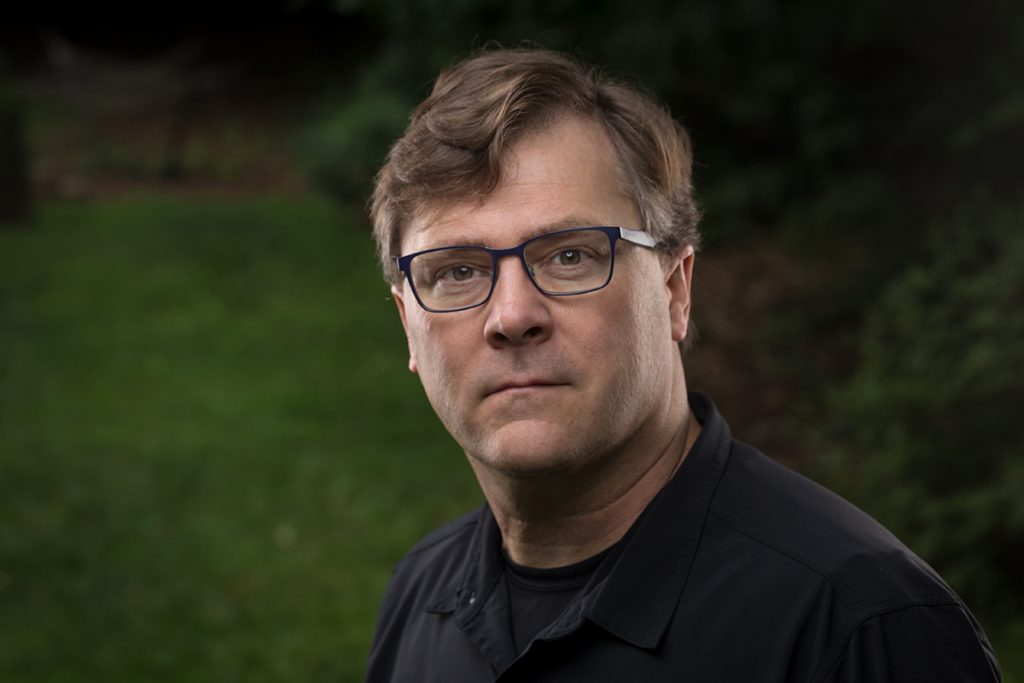
In 2025, Smith received the Carnegie Fellowship for research focusing on subjects related to political polarization for his photo essay “We the People.”
“He was chosen among his peers at UConn and then, you know, among his broader peers nationally to get this. It’s a pretty big deal,” Stanton said.
With his grant of $200,000 from the fellowship, Smith has embarked on a journey across the United States to explore all facets of American cultural identity and life.
Through the project, he hopes to show Americans what lies outside of their corner of the country during this divisive time.
“I travel, I photograph, I meet a lot of people, right? And I hear the polarization and it’s disturbing to me,” Smith said. “I guess the idea and the concept is, you know, ‘Hey, this is our country, this is the people that live here.’”
So far, he’s visited about 38 states and has been working almost non-stop. In a single week he’ll visit up to 10 events to photograph.
“I’ve been a traveling fool, and I am exhausted right now,” Smith said.
Recently, he was in Louisiana for five days, where he photographed everything from festivals to beauty pageants.
“Those community festivals can be very interesting because they really take on very specific cultural things from a particular area,” he said.
One event involved a tomato festival and a pageant to crown “Miss Tomato.”
He explained that lots of times, festivals, such as the tomato festival in Louisiana, are tied to the agricultural roots of the community.
“I like the history part of it,” Smith said. “Like, oh, I didn’t know they grew tomatoes in that part of Louisiana. And it’s like oh, that makes sense. I mean there’splenty of hot weather.”
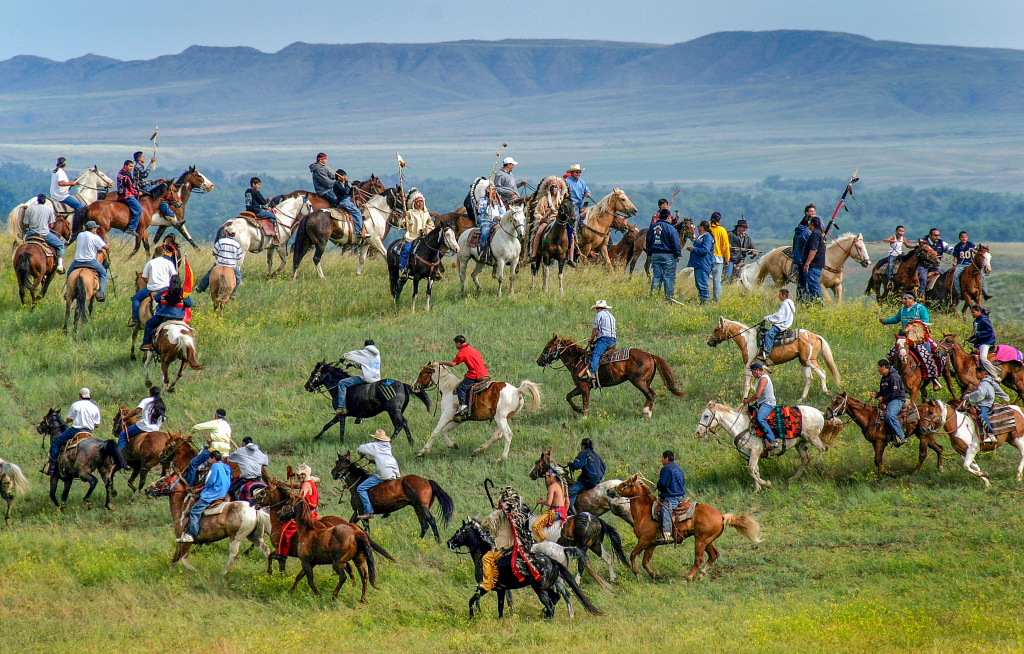
Smith recently announced his retirement from teaching to work on his project and move back West to be closer to his family.
“I love teaching, you know, impacting the future of your field. I think that’s quite an opportunity,” Smith said. “I certainly enjoy my field a great deal so it’s a funny Catch 22 for me because I enjoy doing both.”
According to Stanton, Smith has enriched the department through his experience in the field.
“The thing about when you’re a professor and you’re in the classroom, but then you’re out in the field doing your work, the two don’t seem connected, but they are because you know, you bring your experiences into the classroom and vice versa,” Stanton said.
Farrish, who’s known Smith since he joined the department, said while she’s happy for him and his family, she’s sad to see him go and knows it will be a big loss for the UConn journalism department.
“He’s such a talented journalist, he’s such an extraordinary photographer, but he’s also a wonderful colleague,” Farrish said.